



Our origins
Muntagnard ist rätoromanisch und bedeutet «Bergler».
Gegründet 2018 in Graubünden, verwurzelt in der Schweizer Textiltradition.
Der Anfang: Schweizer Wolle
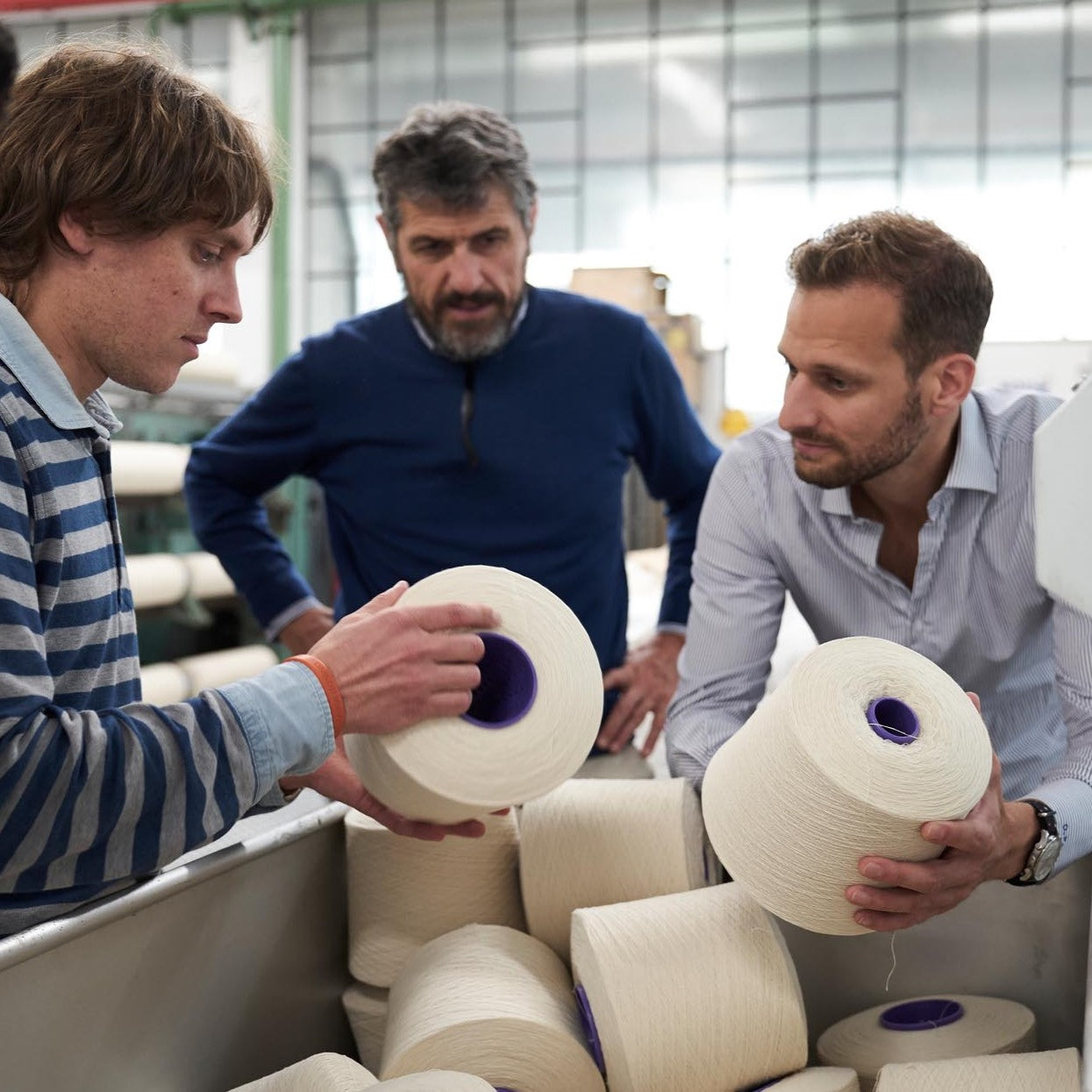
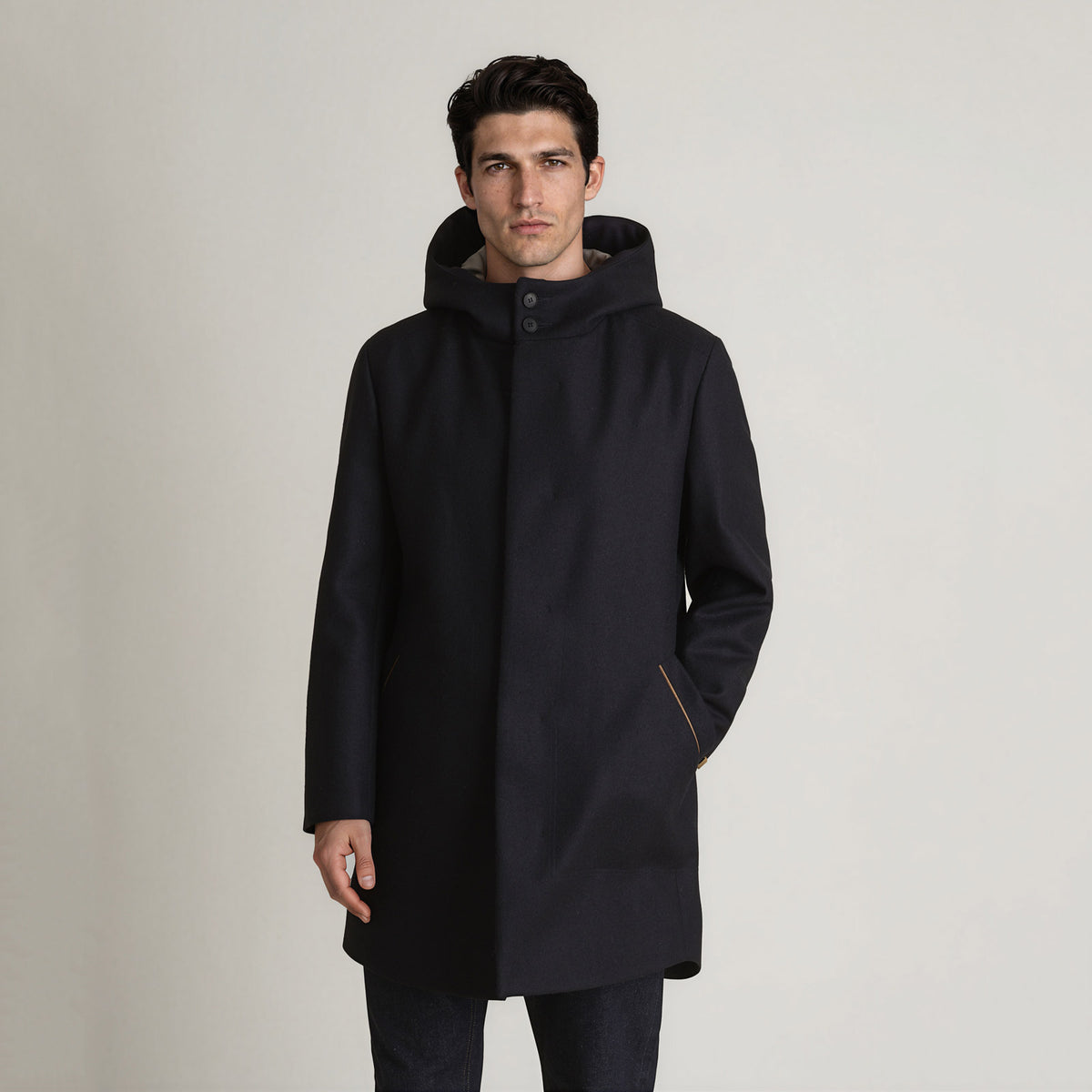
Am Anfang stand die Wolle des Schweizer Alpenschafs, ein Rohstoff, der kaum noch genutzt wird. Gemeinsam mit Partnern in der Schweiz und in Italien haben wir daraus einen eigenen Stoff entwickelt, der den Charakter und die Authentizität der Wolle bewahrt.
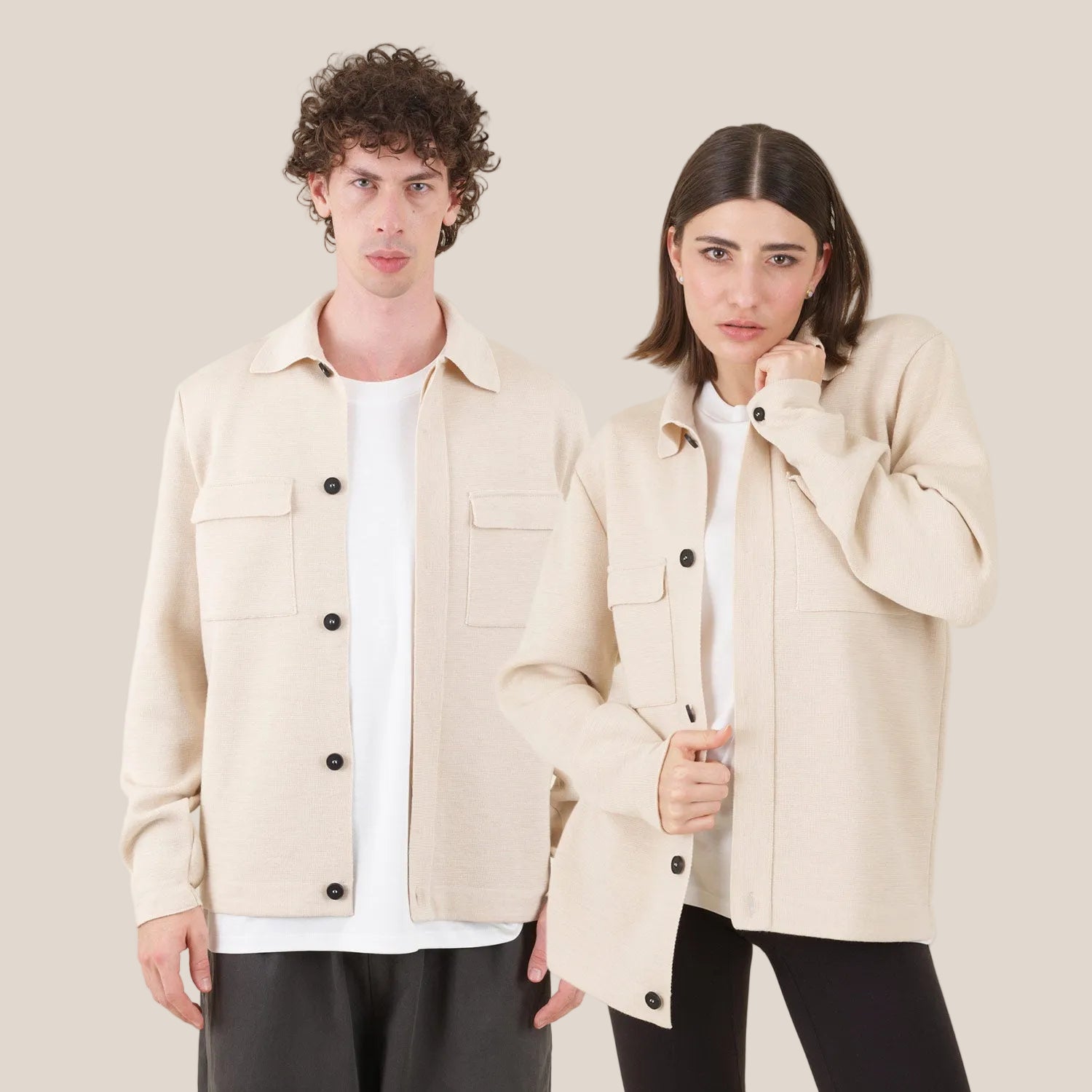
Daraus wurde unser erster LANA Mantel, genäht in einer Manufaktur in Rothenthurm im Kanton Schwyz. Dort entstehen bis heute alle unsere Mäntel und Jacken, in kleinen Serien.
Neue Fasern: LEGNA
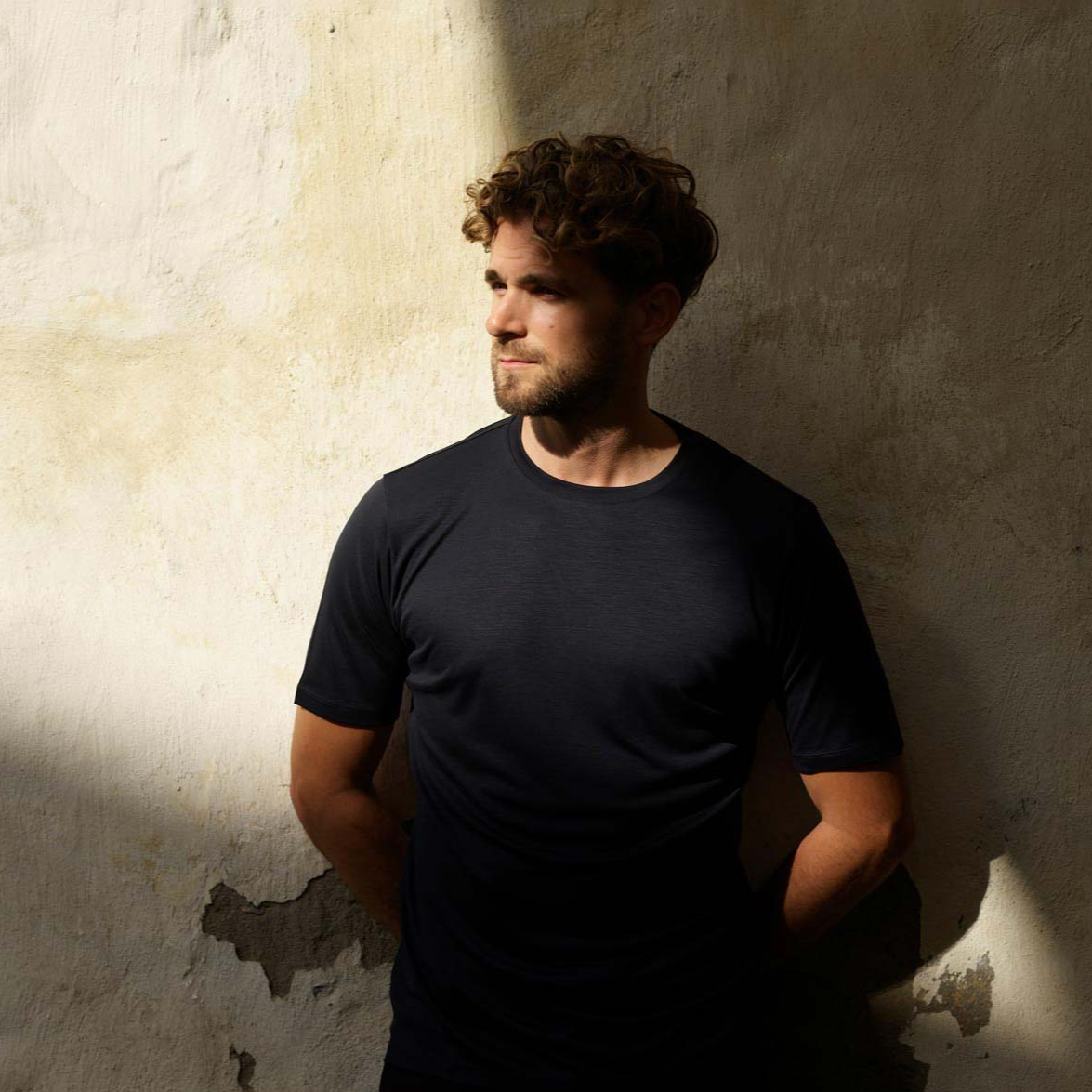
Der erste Mantel hat uns gezeigt, wie viel ein Kleidungsstück seinem Material verdankt. Mit LEGNA haben wir diesen Weg weitergeführt: Holzfasern, eine vergleichsweise junge Textilfaser, die sich glatt und leicht auf der Haut anfühlt. Um sie so zu verarbeiten, wie wir es uns vorstellten, brauchte es Betriebe, die genau darauf spezialisiert sind.
Seither gehört diese Suche fest zu unserer Arbeit: die Suche nach Fasern mit besonderen Eigenschaften und nach dem Handwerk, das ihnen gerecht wird.

Muntagnard heute
Aus diesen Anfängen sind klare Materiallinien gewachsen: LANA aus Wolle, LEGNA aus Holzfasern und MANGOLA aus Baumwolle, ergänzt durch weitere natürliche Rohstoffe. Jede Linie fertigen Partnerbetriebe in Europa, die ihr Material genau kennen und die wir persönlich kennen.
Unseren Wurzeln bleiben wir treu. Graubünden ist unser Zuhause, und unsere Mäntel und Jacken entstehen weiterhin in der Schweiz. Daraus entwickeln wir eine moderne Interpretation von Schweizer Mode: klar, zurückhaltend und gemacht für viele Jahre. Wir nennen diese Haltung Swiss by Design.

Learn more